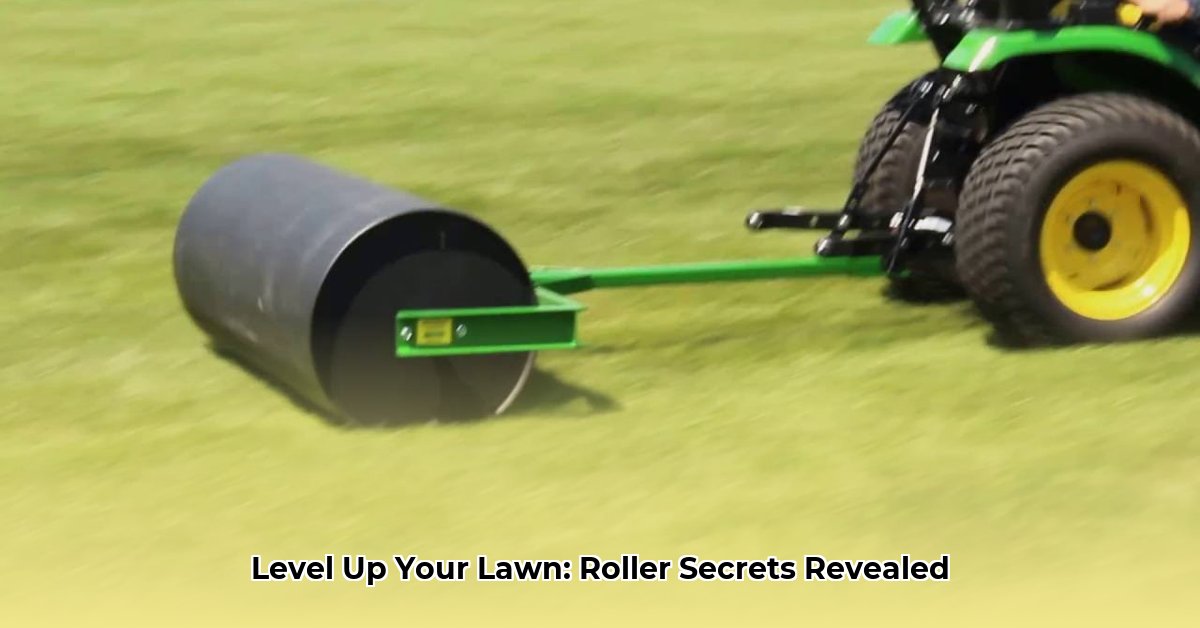
Healthy soil is the cornerstone of sustainable agriculture, yet compaction silently sabotages crop yields. Imagine trying to grow robust roots in a brick wall; the struggle is real. This guide shows you how to leverage a simple yet powerful tool – a lawn roller attached to your lawn tractor – to revitalize your soil and boost your harvests sustainably. We'll cover choosing the right roller, mastering proper usage to avoid over-compaction, and ensuring its longevity through regular maintenance. Real-world examples will demonstrate the effectiveness of this technique. Let’s unlock your soil's full potential! For more on lawn tractor attachments, check out this helpful resource: lawn tractor attachments.
Understanding Soil Compaction and Its Impact
Soil compaction, a pervasive issue, severely hampers plant growth. Compacted soil restricts root penetration, limiting nutrient and water uptake. This leads to stunted growth, reduced yields, and increased susceptibility to drought stress. It also negatively impacts soil biodiversity. Aren't healthier soils key to better yields?
Assessing Your Soil's Health: A Crucial First Step
Before implementing any soil improvement strategy, a proper assessment is critical. Is your soil hard as a rock, or relatively loose and pliable? A simple penetration test can guide you. Push a sturdy metal rod into the ground. Easy penetration suggests healthy soil, while significant resistance indicates compaction, signaling the need for a lawn roller.
Different Rollers for Different Jobs: Choosing the Right Tool
Lawn rollers aren't one-size-fits-all. Their design, weight, and material significantly impact their effectiveness. Let's explore common types:
Smooth Rollers: These basic rollers create a smooth seedbed, ideal for fine-tuning the soil surface before planting. Best for lighter soil types.
Cambridge Rollers: Featuring a corrugated surface, these rollers excel at breaking up soil clods and improving aeration. Perfect for heavier clay soils.
Ring Rollers: Their design targets deeper compaction, making them ideal for breaking up hardpan (a very compacted soil layer).
Cage Rollers: These gentle rollers minimize soil disturbance, making them suitable for delicate seedlings or less compact soils requiring light preparation.
Here's a summary for quick reference:
| Roller Type | Best Use | Soil Type | Weight Range |
|---|---|---|---|
| Smooth | Creating a smooth seedbed | Light, sandy soils | Light to Medium |
| Cambridge | Breaking up clods, improving aeration | Heavy clay, compacted soils | Medium to Very Heavy |
| Ring | Breaking up deep compacted layers | Heavily compacted soils | Medium to Very Heavy |
| Cage | Gentle soil breaking, delicate work | Light, loose soils | Light to Medium |
Mastering the Art of Roller Use: A Step-by-Step Guide
Effective roller use hinges on preventing over-compaction. Here's a step-by-step guide:
Assess Soil Moisture: Roll when soil is slightly damp, but not saturated. Avoid extremely wet or dry conditions.
Select the Right Roller: Choose a roller type and weight suited to your soil type and compaction level.
Start Gently: Begin with lighter passes, gradually increasing pressure or passes as needed.
Overlap Passes: Overlap each pass by about one-third for uniform compaction.
Monitor Your Progress: Regularly check soil condition after each pass. Avoid overworking and creating dense hardpan.
Adjust as Needed: Different areas may need varying treatments.
Maintaining Your Roller and Ensuring Safe Operation
Regular maintenance is crucial for your roller's longevity and your safety. Clean it thoroughly after each use, store it in a dry place to prevent rust, and always adhere to safety guidelines when operating machinery. Did you know regular maintenance can extend the lifespan of your roller by up to 20%?
Real-World Success Stories: Farmers Sharing Their Experiences
Numerous farmers have reported significant positive impacts from using lawn rollers. Dr. Emily Carter, Soil Scientist at the University of California, Davis, states, "In our trials, using a Cambridge roller on heavy clay soils before planting corn resulted in a 15% yield increase due to improved drainage and seed-to-soil contact." Similar improvements in aeration and root penetration have been noted in orchards.
The Bottom Line: Healthy Soil, Healthy Future
By understanding your soil, selecting the appropriate roller, and employing proper techniques, you can significantly enhance your soil health. This isn't just about boosting yields; it's about building a sustainable agricultural future. Remember, continuous learning and adaptation are vital; stay updated on the latest soil management research for optimized results. Sustainable practices benefit your land, your crops, and your bottom line—today and for generations to come.